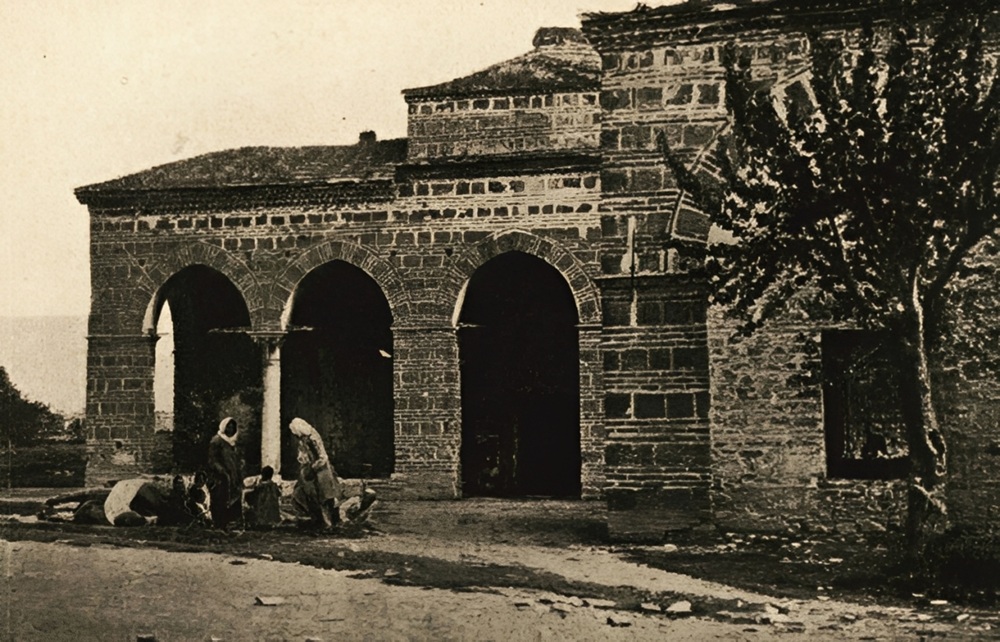
Byzantine building in Nicaea of Bithynia, probably a bathhouse, known as the "Palace of the Gypsies." Source: Louis de Launay, La Turquie que l'on voit, 1913. Catherine Laskarides Foundation Library.
The recent meeting held in Türkiye between the Pope and the Patriarch sheds light on the path of modern Hellenism and the violent destruction of the Greek community by the Kemalists.
By Vlasis Agtzidis*
One of the events that marked the end of 2025, was the meeting of Pope Leo XIV and Ecumenical Patriarch Bartholomew in Nicaea (today İznik) of the Bithynia region, on the occasion of the 1,700th anniversary of the First Ecumenical Council. A highly symbolic meeting that also served as an opportunity to look back on a forgotten history.
In Nicaea, during the reign of Constantine the Great, more than 200 bishops formulated the basic aspects of the Christian faith, which to this day constitute the core of Christian theology. The region was pivotal not only for ecclesiastical history but also for the formation of modern Hellenism.
The ceremony took place at an archaeological site on the shores of a lake at Nicaea (today Lake İznik), upon the ruins of a 4th century Christian basilica. There are two theories regarding this specific site: according to the first, the ruins belong to the Basilica of Saint Neophytos, while according to the second, it is the Church of the Holy Fathers where the First Ecumenical Council took place.
However, this same space is also associated with one of the darkest episodes in the region's recent history.
During the fierce massacres perpetrated by Kemalist gangs in the summer of 1920, Father Iordanis, priest of the Greek community of Nicaea, was murdered by the çetes of Cemal (pronounced Djemal) Bey's Gök Bayrak regiment.
An eyewitness to the events was Michail Angelou who, in his memoir, wrote:
"Then, after being tortured, he [Father Iordanis] was driven to a place beside the lake and slaughtered precisely at the point where the Ecumenical Council was held."
The commemoration of the First Ecumenical Council through this modern ceremony brought back to mind two crucial historical aspects: the first being the importance of Nicaea in the formation of modern Hellenism, and the other being the moment when the Greek presence in the region definitively ceased.
The formation of Modern Hellenism
Greeks settled in the region during the 8th-7th century BC. From that period, until the dramatic events of 1922, they existed with admirable continuity and endurance, despite the great upheavals that history brought.
A turning point in the political history of the region was the creation of a medieval state, the Empire of Nicaea, as a result of the capture of Constantinople by the Crusaders in the spring of 1204. The Crusaders destroyed the central fabric of Byzantium, the only Christian state in the East that could have constituted a substantial obstacle to expansionist Islam, both Arabic and Turkish.
This act of the Catholic West henceforth raised an insurmountable wall between Western and Eastern Christianity and facilitated the dominance of the Muslim Turks.
After the capture of Constantinople, the Greeks established three states: one in the Balkans and two in Asia Minor. With centers in Nicaea in Bithynia, Epirus, and Trebizond in Pontus, efforts began, to recapture the capital. The longest-lived of these three states was the Empire of Trebizond which survived for 257 years.
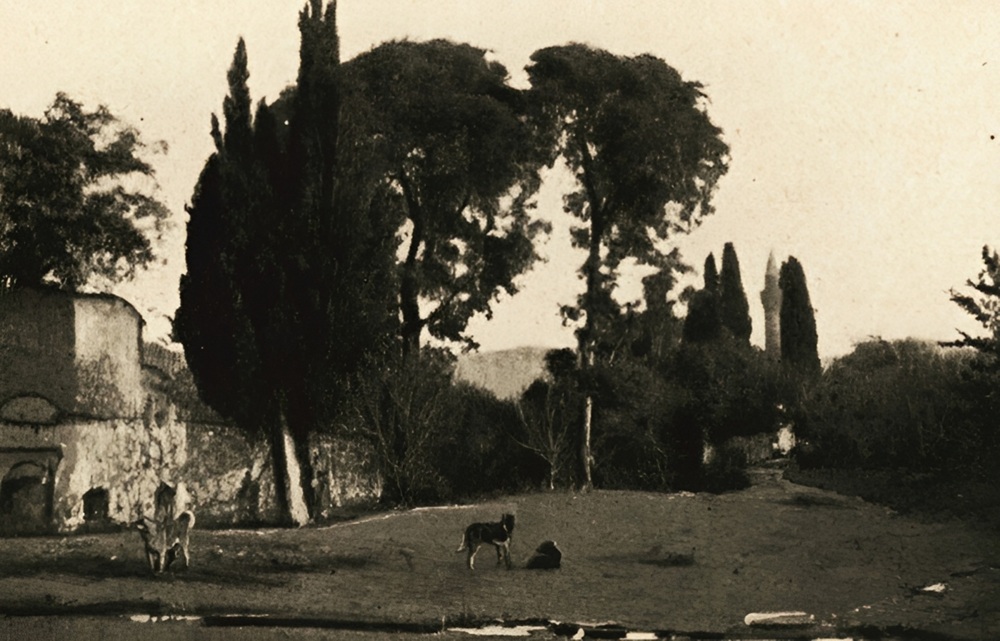
The church of Hagia Sophia, later the Orhan Mosque, in Nicaea of Bithynia.
Source: Louis de Launay, La Turquie que l’on voit, 1913. Catherine Laskarides Foundation Library.
The Empire of Nicaea, however, became the main heir to Byzantium. Starting in 1204, significant ideological turbulence occurred in the free Greek world. The historical course of the population and the changes in its identity and self-perception became part of the general framework for the course of the whole of modern Hellenism.
The term "Modern Hellenism" does not have a static historical form but is determined by the rich and varied influences that caused its peculiarity, which K. Dimaras describes in detail. And it was “Modern Hellenism" that had been taking shape since the 13th century, when Theodore II Laskaris called the Empire of Nicaea "Greece" and considered that the Eastern (Byzantine) Romans were ethnically Greek, writing characteristically:
“The glory of a Christian Greek never fades” [Ελλήνων χριστωνυμούμενον κλέος ου σβέννυται].
The historical event that determined the fate of the region was the appearance of the Turkish tribes and the advent of Islam as a new ideological tool for consolidating Turkish rule. A large part of the population was converted for various reasons, and together with the newly arrived settlers, it formed the basis of the contemporary population.
A significant part of the Greek community retained its old Greek Orthodox identity and experienced great cultural development during the period of the Ottoman Tanzimat reforms.
However, around the beginning of World War I, the seizure of Ottoman power by the Young Turks shaped new conditions, plunging the entire Empire into an era of fierce nationalist confrontations.
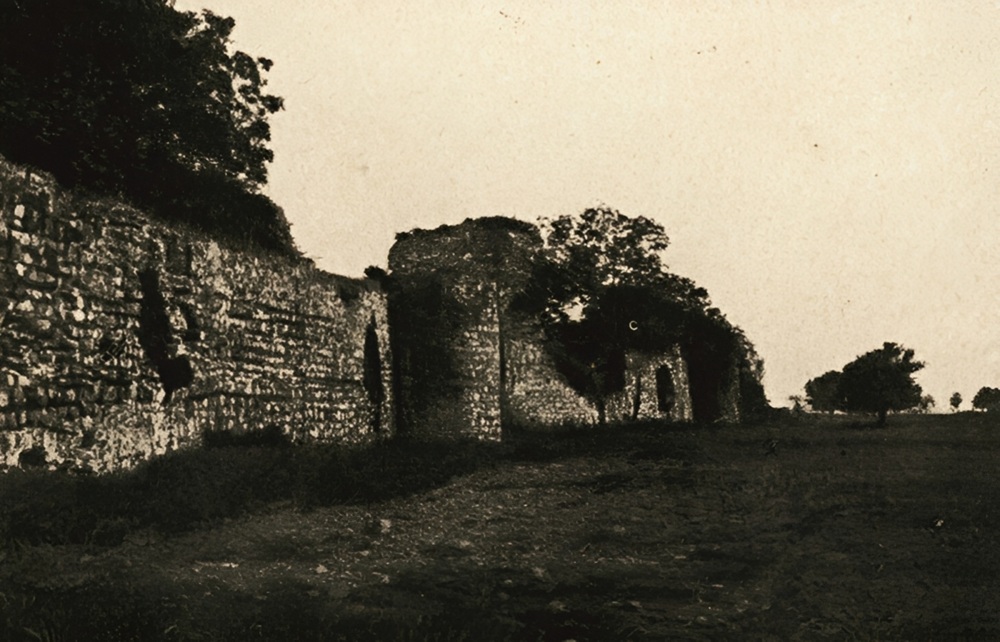
View of the walls of Nicaea near the Synod Gate, south of the Sea Gate.
Source: Louis de Launay, La Turquie que l’on voit, 1913. Catherine Laskarides Foundation Library.
A testimony from the Kemalist era
Regarding the events that occurred in the region, recorded testimonies from survivors do exist, and the written memoir of Michail Angelou falls into this category.
Angelou was an intellectual from Asia Minor, born in the town of Kiuplia (Tr: Küplü) in the region of Bithynia, who found himself in the midst of the events and had the ability to interpret the historical moment.
His word is direct, based on his firsthand experience and unmediated, since he is a direct witness to what he describes.
The sum of all these testimonies constitutes a category of texts in which the victims of a great catastrophe attempt to prevent their annihilation from the memory of humanity. An annihilation that is a consequence of the dominant interpretation that the perpetrators have of historical events.

Michail Angelou’s memoir was recently translated and published under the title Escape from Asia Minor* (Greek Genocide Resource Center 2024). Available at Amazon
These documented testimonies bring to the fore social groups that found themselves in the vortex of historical events and were subsequently excluded from the centers of power and from the media that shape the collective memory of society. He himself describes his text as follows:
"The slaughter and extermination of the Christians in the East by an eyewitness."
In his narration, he describes in detail, point by point, village by village, the way in which the Kemalist gangs exterminated Greeks.
In the case of the Greek community of the city of Nicaea, Michail Angelou narrates and documents the events at a time prior to August 1922, as follows:
"Nicaea has around 5,000 residents of which 1,000 are Greeks and is situated near the banks of Lake Ascanius (today Lake İznik). Nicaea was the seat of the Emperors of Byzantium after the fall of Constantinople by the Latins. At this city, the first and the seventh Ecumenical Councils took place and beside the lake, the remains still exist including those of many Byzantine churches which have been converted into mosques. The church of the Virgin Mary functioned as a church for the citizens up until the 25th of August 1920. The Metropolitan of Nicaea, Vasilios wrote an important book which mentioned this church under the title The Monastery of Yakinthos, in which ancient and valuable heir looms had been preserved.
"This sacred city, after Jerusalem, where time respected the monuments which attest to its ancient glory, was destined to fall prey to the fire, and its citizens, the unfortunate Christians, were destined to be slaughtered like lambs on the streets and in their homes.
"On the 15th of August 1920, on the day of the Festival (Dormition of the Theotokos), the priest Father Iordanis was first to cover the earth with his blood. He was arrested by the çetes of Djemal Bey of the Gök Bayrak (Sky Flag) regiment and a saddle was put over his shoulders, a saddlebag beside it and around his mouth a bridle. He was then taken to the town square where he was horseshoed after being ridiculed by the çetes and a Muslim mob. Then, after being tortured, he was driven to a place beside the lake and slaughtered precisely at the point where the ruins of the Ecumenical Council lie.
"All the Greeks, after being tortured and dishonored in all possible ways, were slaughtered. Their bodies were then thrown into wells. Fifteen Greeks hid inside a furnace in order to escape the slaughter but the sounds of a young baby exposed their location and they were all burnt alive.
"And this is how the complete extermination of all the Greek residents was carried out. After the pillage, the city was torched and today only ashes remain. Of all the Christians, only eight survived and they are now living at Bursa and Kios (today Gemlik)."
* Vlasis Agtzidis (PhD in Modern History, at the Department of History and Archaeology of the Faculty of Philosophy of the Aristotle University of Thessaloniki).
This article was originally published in Greek on January 2, 2026 and translated to English with the author's permission by Mary Axiotis and Aris Tsilfidis.
Further Reading:
The İznik (Nicaea) Massacre: August 1920